Why Does My Kitchen Sink Back Up When the Dishwasher Runs?
Team of dedicated professionals committed to delivering top-quality service with honesty and integrity. With years of experience in the plumbing industry, we have the skills and expertise to handle everything from routine maintenance to emergency repairs.
JEFF THUNGC • November 4, 2026
OUR BEST TEAM
Dedicated to providing great services
Each member of our team is trained in the latest industry techniques and committed to upholding the highest standards of safety and professionalism.
From small repairs to large installations, you can count on us for reliable, friendly, and efficient service every time.
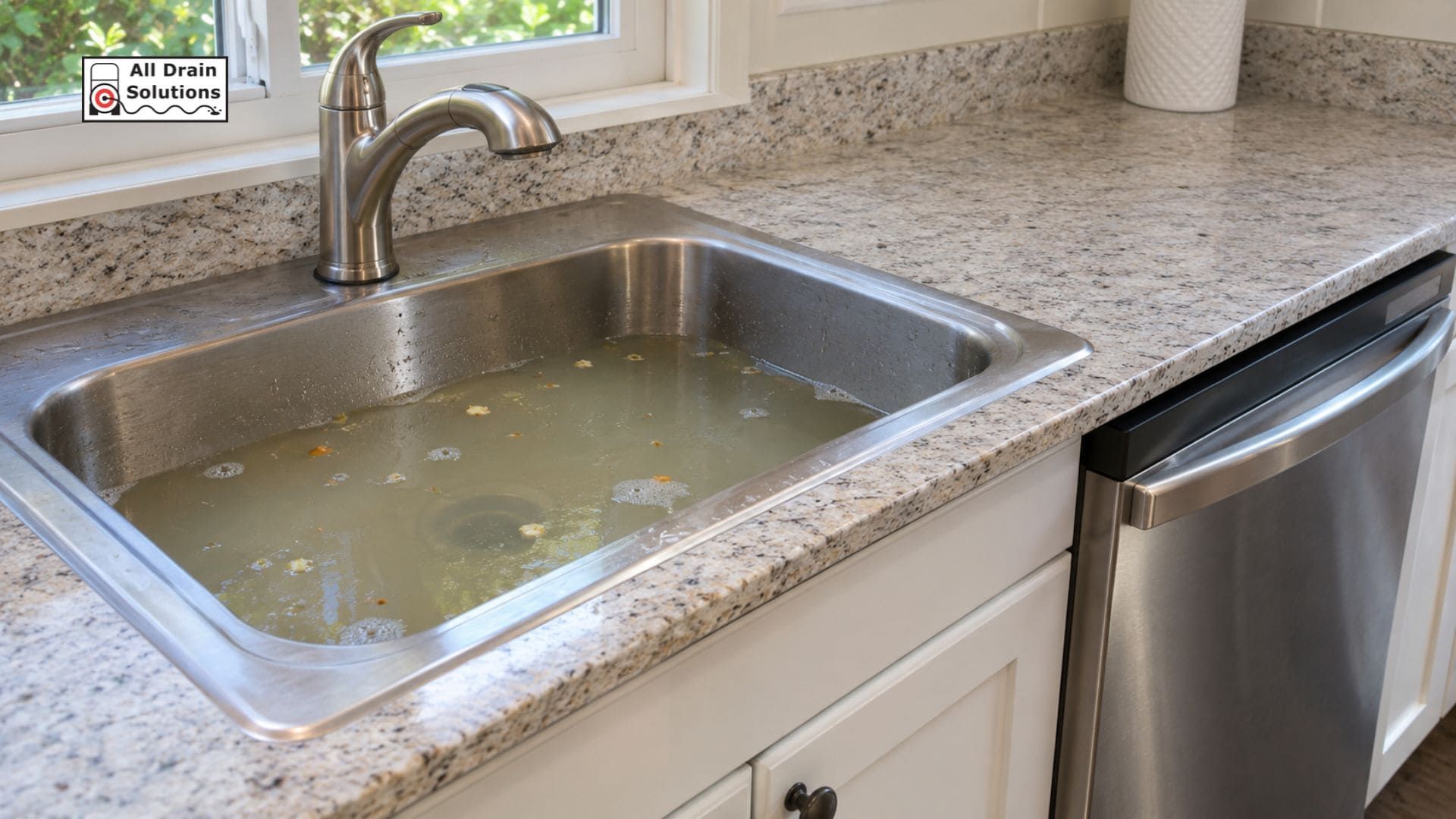
If your kitchen sink fills with dirty water when the dishwasher drains, a blockage in the shared kitchen drain is often the cause. The dishwasher pumps wastewater into the sink’s drainage system. When that path is restricted, water can rise into the basin instead of flowing away.
Where the water appears helps narrow the problem. Water coming through the sink drain suggests a shared drain restriction. Water spilling from a fitting beside the faucet or remaining inside the dishwasher can indicate a different issue.
Here is what these symptoms can mean, what you can safely check, and when to arrange professional help.
- Sink backups during dishwasher use often involve a restricted kitchen drain.
- A working garbage disposal does not necessarily mean the connected drain is clear.
- Installation issues and blocked air gaps can cause separate dishwasher drainage problems.
- Stop using the affected fixtures if water is rising or leaking.
Why Does Dishwasher Water Back Up Into the Kitchen Sink?
The dishwasher and kitchen sink commonly share part of the same drainage path. When a blockage limits flow beyond their connection, dishwasher discharge can rise through the sink drain. A partial restriction may allow water to drain slowly afterward, making the problem seem intermittent.
Grease and Food Debris Narrow the Drain
Cooking grease and food particles can collect inside kitchen drainpipes, reducing the space available for wastewater to pass.
You may first notice pooling while washing dishes or a sink that takes longer to empty. The dishwasher’s discharge can then reveal the restriction more clearly.
In a double sink, water may rise into the opposite basin because both sides connect to the same drainage system. This does not necessarily mean each basin has a separate clog.
All Drain Solutions’ drain cleaning tips to prevent plumbing problems explain everyday habits that help reduce buildup.
The Garbage Disposal Outlet May Be Restricted
Many dishwashers drain through a connection on the garbage disposal. Debris around the disposal outlet or in the connected pipe can interfere with wastewater leaving the kitchen.
The disposal’s motor can operate even when a drain restriction remains. If it runs normally but the sink drains slowly, the problem may be in the connected plumbing.
Installation Issues Can Affect Dishwasher Drainage
If the problem began immediately after a garbage disposal replacement, the dishwasher inlet connection should be checked. New disposals commonly contain a knockout plug that must be removed when connecting a dishwasher.
A plug left in place prevents dishwasher water from entering the disposal properly. This typically causes dishwasher drainage trouble rather than directly explaining water rising through the sink drain.
Some kitchens also have an air gap, a small fitting beside the faucet that helps prevent dirty drain water from flowing back into the dishwasher. Water spilling from this fitting may indicate a blockage in the air gap or its outlet hose.
What Should You Do When the Sink Backs Up?
Stop using the dishwasher and faucet if water is rising in the basin. Adding more water can cause an overflow. Once the immediate backup has stopped, observe the symptoms without deliberately recreating the problem.
Identify Where Water Collects
Note whether water is coming through the sink drain, spilling from the air gap, staying inside the dishwasher, or leaking into the cabinet.
These locations suggest different areas to investigate:
- Sink basin: A restriction in the shared kitchen drain may be involved.
- Air gap: The fitting or its connected outlet hose may be blocked.
- Dishwasher only: The filter, drain hose, pump, or connection may need attention.
- Cabinet: A leaking connection or another plumbing fault needs assessment.
These observations provide clues, but they do not confirm the cause. For additional guidance on recognizing problems that need attention, read All Drain Solutions’ warning signs that you need to call a plumber.
Record When the Problem Started
Think about whether the sink was already slow before the dishwasher ran. Note any recent appliance installation, disposal replacement, or plumbing work.
Useful details to share with a technician include:
- Whether the backup happens during every dishwasher cycle
- Whether one or both sink basins fill
- Whether water eventually drains away
- Whether other fixtures are affected
Avoid running a full cycle just to demonstrate the problem. A description or a photo taken safely during the original backup may help explain what happened.
Keep Disposal Checks Safe
Never place your hand inside a garbage disposal. Disconnect its power before any inspection and follow the manufacturer’s safety instructions.
If the disposal hums, stops unexpectedly, or fails to operate, avoid repeatedly switching it on. Leave electrical troubleshooting, hose removal, and dismantling unfamiliar plumbing connections to a qualified professional.
When Should You Call All Drain Solutions?
Schedule an assessment when backups recur, standing water does not clear, or the problem returns after an attempted fix. A sink that eventually empties can still have a restriction that needs attention.
Recognize When Professional Help Is Needed
Professional help is appropriate when ordinary kitchen use repeatedly causes pooling, both basins fill, or drainage has become progressively slower.
Mention any installation work when booking service. A problem that starts after a disposal replacement may require a connection check rather than drain cleaning.
If the sink drains normally and water remains only inside the dishwasher, appliance service may be needed. Describing the symptoms helps identify the appropriate next step.
Choose Experienced Help for Your Kitchen Drain
All Drain Solutions provides professional kitchen drain cleaning in Puyallup and surrounding communities. Its team combines plumbing expertise and professional equipment with clear explanations and upfront estimates.
The appropriate solution depends on the location of the restriction and the condition of the plumbing. Assessing those factors helps determine whether the drain needs cleaning or another component requires attention.
For homeowners facing recurring kitchen backups, All Drain Solutions offers a thorough approach focused on identifying the problem and restoring proper drainage. Contact All Drain Solutions to arrange a kitchen drain evaluation and explain what happens when your dishwasher runs.
Frequently Asked Questions
Can I keep using the dishwasher if the sink eventually drains?
Avoid further cycles until the cause is addressed. A sink that eventually empties may still have a partial blockage, and another discharge could cause it to overflow.
Is a dishwasher-related sink backup an emergency?
Seek urgent help if water is overflowing, leaking into cabinets, or backing up through several fixtures. Stop using the affected fixtures and request emergency plumbing assistance when there is an immediate risk of water damage.
Should I pour drain cleaner into the dishwasher?
Do not pour household drain-opening chemicals into the dishwasher. Follow the appliance manufacturer’s instructions. If you have already used a chemical product in the sink drain, tell the technician what you used before work begins.
Does a gurgling sink prove the main sewer line is blocked?
No. Gurgling alone does not identify the cause or location of a drainage problem. A kitchen-only backup may involve the kitchen drain, while problems affecting several fixtures can indicate a broader restriction. A professional assessment can determine where attention is needed.

Contact Us
Got a plumbing issue? We’re here to help! Whether you need emergency repairs, routine maintenance, or have a question about our services, our team is ready to assist you.
GET A PROFESSIONAL HELP
Book a service today
We will get back to you as soon as possible.
Please try again later.
(206) 899-7764
Quick and Reliable
We are available 24/7 via fax, email or telephone